
Arkansas Traffic Court Records
Arkansas traffic court records are public documents created when a driver is cited for a traffic violation in the state. These records are held at the district court in the jurisdiction where the ticket was issued. You can search Arkansas traffic court records online through the state CourtConnect portal, by contacting the clerk at the local district court, or by submitting a written request under the Arkansas Freedom of Information Act. This guide covers how to find, access, and request traffic court records across all 75 Arkansas counties.
Arkansas Traffic Court Records Overview
How Arkansas Traffic Courts Work
District courts handle traffic violations throughout Arkansas. These courts have subject matter jurisdiction over traffic violations, misdemeanor offenses, violations of state law and local ordinances, preliminary felony matters, and civil matters where the amount at issue does not exceed $25,000. A small claims division handles civil cases up to $5,000 where citizens can represent themselves without an attorney.
As of January 1, 2025, Arkansas has established 41 District Court Judicial Districts, served by 70 full-time district court judges. A judicial district may cover a single city, an entire county, or combine more than one county. The citation you receive tells you which district court has jurisdiction over your case. That court is also where your traffic court record is filed and stored. If you are not sure which court handled a case, the state CourtConnect system allows you to search by name across all participating courts.
The Arkansas Judiciary oversees all courts in the state. Circuit courts are the general jurisdiction trial courts. Under Constitutional Amendment 80, effective January 1, 2002, circuit courts operate with five subject matter divisions: criminal, civil, probate, domestic relations, and juvenile. Traffic cases appealed from district court move up to the circuit court level. Circuit judges run in nonpartisan elections and must have been licensed attorneys for at least six years before taking office. They serve six-year terms.
The Arkansas Court of Appeals handles intermediate appeals from circuit courts. The court has twelve judges divided into seven districts. Traffic cases that work their way up through the system may eventually reach the Court of Appeals if a legal question is disputed. Most traffic matters, though, are resolved at the district court level without going further.
The Arkansas District Courts page at the official judiciary website describes how district courts are organized, which cases they handle, and how judicial districts are assigned across the state.
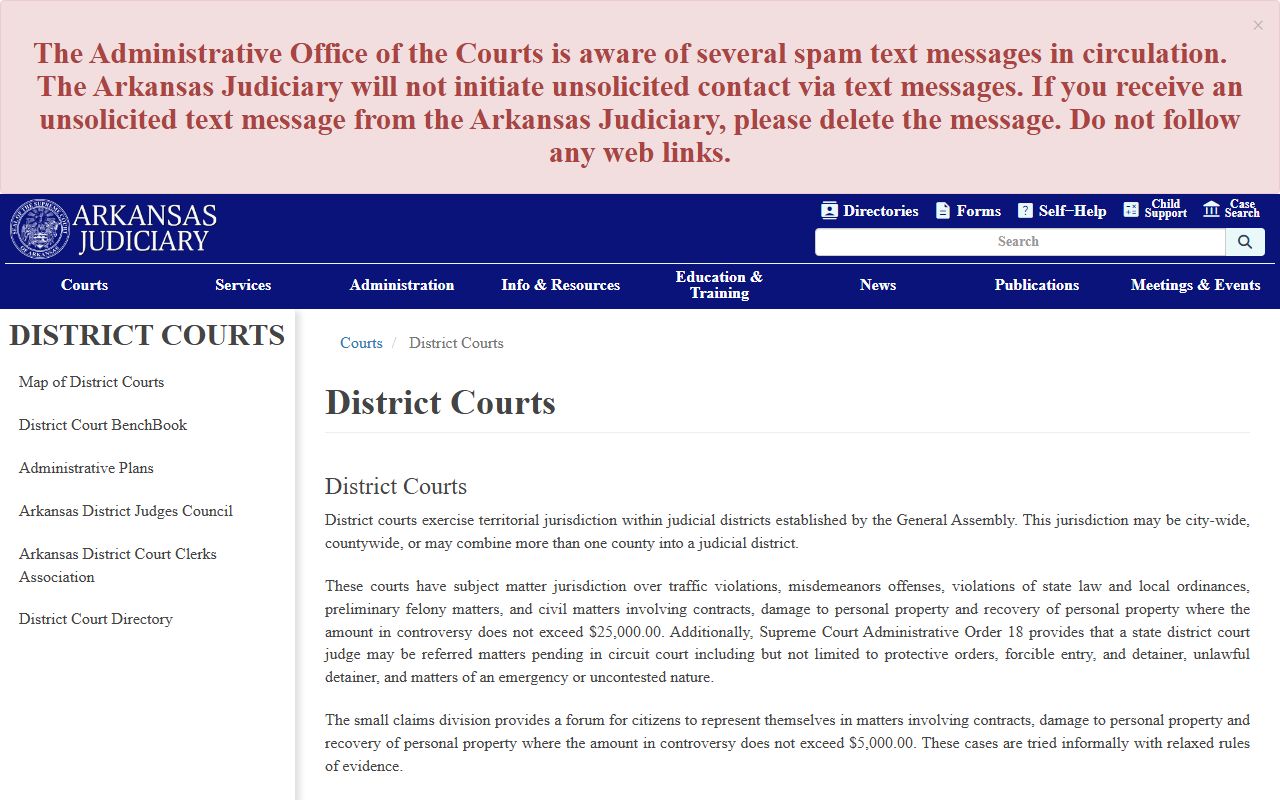
District courts process the vast majority of traffic court records in Arkansas. They are the right starting point for anyone searching for a traffic citation or case outcome.
Note: The court listed on your traffic citation is the court that holds your record. If you do not know which court handled a case, use CourtConnect to search statewide by name or ticket number.
Search Arkansas Traffic Court Records Online
The main tool for searching Arkansas traffic court records online is CourtConnect, operated by the Arkansas Judiciary. The Arkansas Judiciary CourtConnect portal is free to use and does not require an account. You can search by party name, case type, ticket number, or filing date. Results display party names, case status, hearing dates, and docket entries. The system covers participating district courts statewide and is updated regularly as cases move through the process.
Some courts use a separate search interface. Courts on the Contexte Case Management System, including Washington County courts, can be searched through the Arkansas public portal at caseinfo.arcourts.gov/opad. That system lets you search by party name or case number and returns the same type of case information. If you cannot find a record on one portal, try the other. Major counties like Benton and Pulaski may also have additional resources linked from their own county websites.
The Arkansas Judiciary official website is the gateway to all state court services, including CourtConnect and information about all Arkansas courts.
The Judiciary site links directly to CourtConnect, online payment options, and court contact information for every county. Bookmark it if you search for traffic court records regularly.
If you cannot locate a case online, call the Administrative Office of the Courts at (501) 410-1900 or toll-free at 1-800-950-8221. Staff can help you identify which court has jurisdiction and provide guidance on how to submit a records request. New cases sometimes take one to two days to appear in the system after the initial filing.
Traffic Violations and Traffic Court Records in Arkansas
Arkansas traffic violations fall into two groups. Infractions are the less serious category. If you receive an infraction ticket, you must pay the full fine before the date listed on the citation or risk added penalties. Payment can be made in person at the court, by mail, by phone, or online through the state e-Traffic system. The system accepts Visa, Discover, and MasterCard. The Administrative Office of the Courts can be reached at (501) 410-1900 or 1-800-950-8221 if you have questions about the payment process.
Some citations include the notation "CPw/DS." This means you may qualify to attend a driving school as an alternative. Completing the program can keep the violation off your driving record. Only citations with that specific notation are eligible. Citizens who want to enter a not-guilty plea must check the appropriate option on the back of the citation and mail it to the court within five working days. The court then sets a hearing date and sends you notice.
Criminal traffic violations are more serious. If your ticket involves a criminal offense, you will generally be required to appear in court on the date listed. Possible consequences include fines, demerit points on your driver's license, license suspension or revocation, and in some cases jail time. Under Arkansas Code Section 25-19-105, traffic court records generated during these proceedings are classified as public information under state law. The Arkansas Department of Finance and Administration is responsible for maintaining the central file of traffic offenses across the state, governed by Arkansas Code Sections 27-50-901 through 27-50-912.
This guide on Arkansas traffic court records outlines how records are created during traffic proceedings and what information they typically contain.
Traffic court records in Arkansas include the initial citation, any evidence reports, docket entries, and the final case disposition. All of these are generally public and available upon request.
Information about how traffic violations work in Arkansas covers the two main types of violations and what each one means for your driving record.
Court clerks maintain case records and can provide information about specific traffic violation cases upon request. They are the custodians of these records at the district court level.
Note: Paying a traffic fine is considered an admission of guilt in Arkansas and will be noted on your driving record. If you want to dispute the violation, enter a not-guilty plea before paying anything.
Responding to an Arkansas Traffic Ticket
When you get a traffic ticket in Arkansas, two options are available. You can pay the fine, which closes the case but adds the violation to your record. Or you can contest the citation, which puts the matter before a judge at a hearing.
To contest a ticket, select the not-guilty option on the back of the citation and mail it to the court within five working days. The court schedules a hearing and notifies you of the date by mail. At the hearing, you may present evidence, cross-examine the citing officer, and explain your position. If the judge rules in your favor, the case is dismissed. If not, you pay the original fine plus any applicable court costs. People facing serious violations, such as those that could lead to license suspension, sometimes hire an attorney to represent them at the hearing.
A traffic conviction can have lasting effects under Arkansas law. Fines vary depending on the violation. Demerit points accumulate on your driving record under the system maintained by the DFA. Repeated violations can trigger a license suspension. Speed limit violations are governed by Arkansas Code Sections 27-51-201 through 27-51-217. Wireless device violations fall under Arkansas Code Sections 27-51-1501 through 27-51-1506 (Paul's Law). Both sets of statutes carry specific penalties that go on the record.
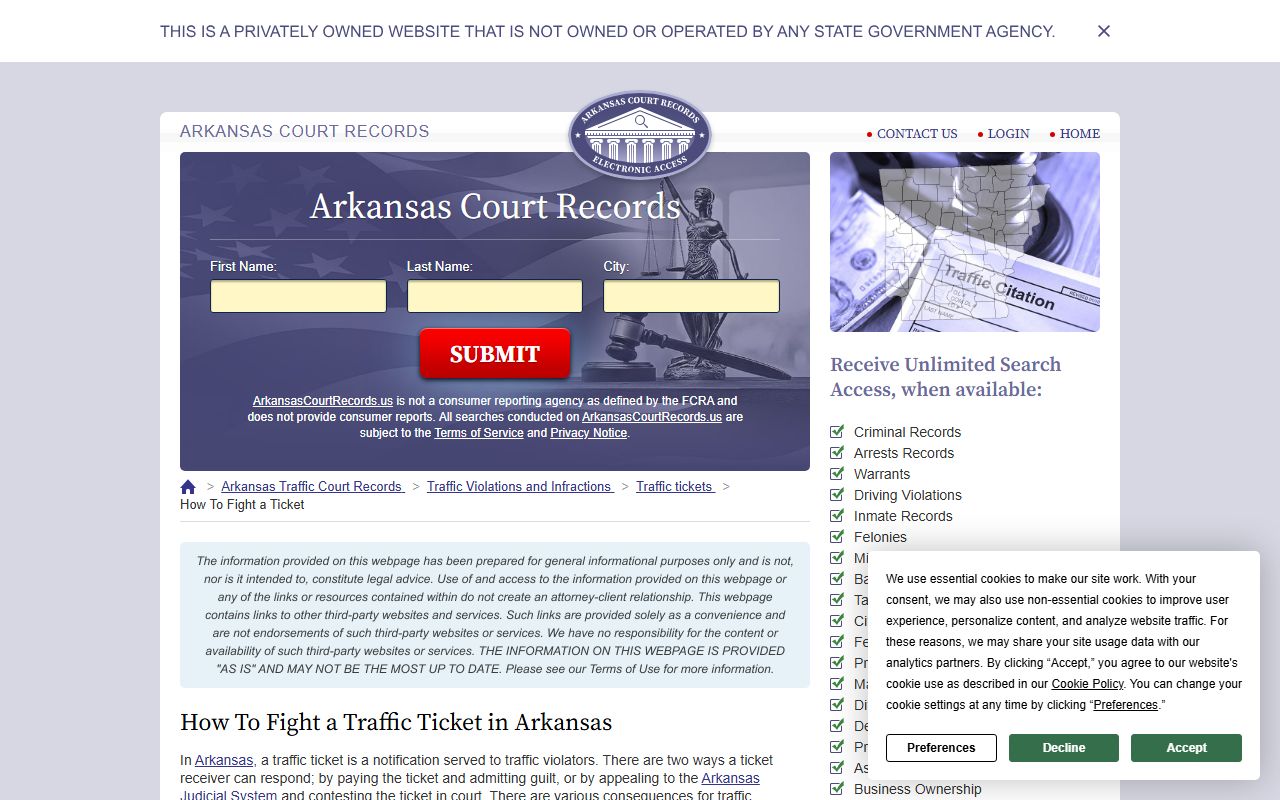
Guidance on how to fight a traffic ticket in Arkansas explains the process of contesting a citation and what to expect at a district court hearing.
Missing your hearing date is a serious mistake. A default judgment may be entered against you, and you could face a warrant or suspension of your license on top of the original fine.
Note: If your citation has "CPw/DS" printed on it, ask the court clerk about the driving school option before your hearing date. The program has specific requirements and must be completed within a set timeframe.
Arkansas Driving Records and Traffic Court Files
Traffic court records and driving records are two different things. Traffic court records are the case files at the district court. Your driving record is maintained separately by the Arkansas Department of Finance and Administration, Office of Driver Services.
Your driving record shows all traffic violations that resulted in a conviction, points added to your license, license suspensions or revocations, and other DFA actions. Fees for an uncertified or limited driving record generally range from $8.50 to $13. Certified records and commercial driver's license records carry slightly higher fees. Contact the DFA Office of Driver Services directly for current rates and to find out how to request your record. The DFA file is the authoritative record of what is on your license and how many points have accumulated.
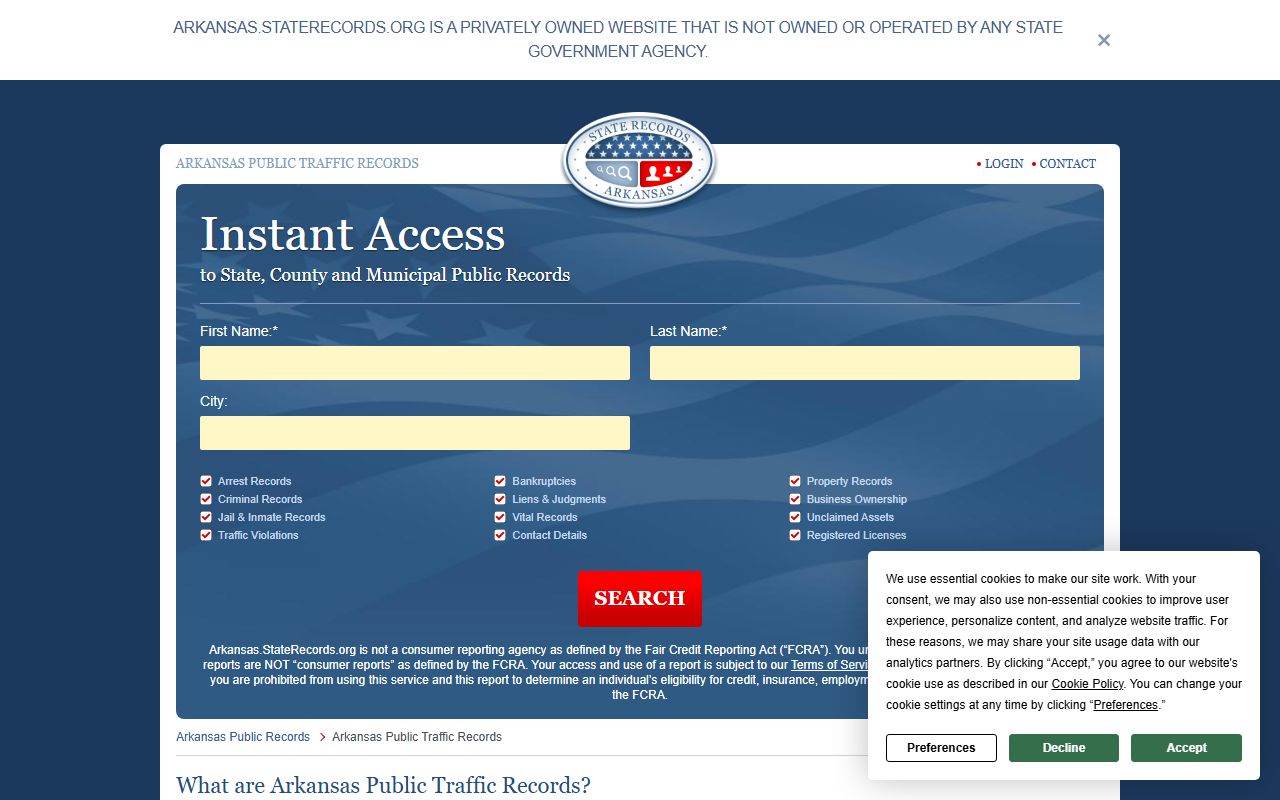
The Arkansas traffic records overview describes how traffic records are classified as public under state FOIA law and explains the difference between driving records and court case files.
Both the court case record and the DFA driver record are generally public documents, though each serves a different purpose and is held by a different agency.
Public Access to Arkansas Traffic Court Records
Arkansas traffic court records are public under the Arkansas Freedom of Information Act, first enacted in 1967. The law covers writings, recorded sounds, films, tapes, electronic or computer-based information, and data compilations required by law to be kept or maintained. Records created by courts of public record fall within this definition. Traffic court records are not exempt, and anyone can request them without stating a reason.
The core access statute is Arkansas Code Section 25-19-105. Under this law, all public records must be open to inspection and copying by any Arkansas citizen during regular business hours of the records custodian. Requests can be made in person, by phone, by mail, by fax, or by email. The agency must respond immediately if the records are readily available, or within three business days if they are in active use or storage. Fees for copies cannot exceed the actual cost of reproduction. If the estimated fee exceeds $25, the agency may ask you to pay in advance before pulling the records.
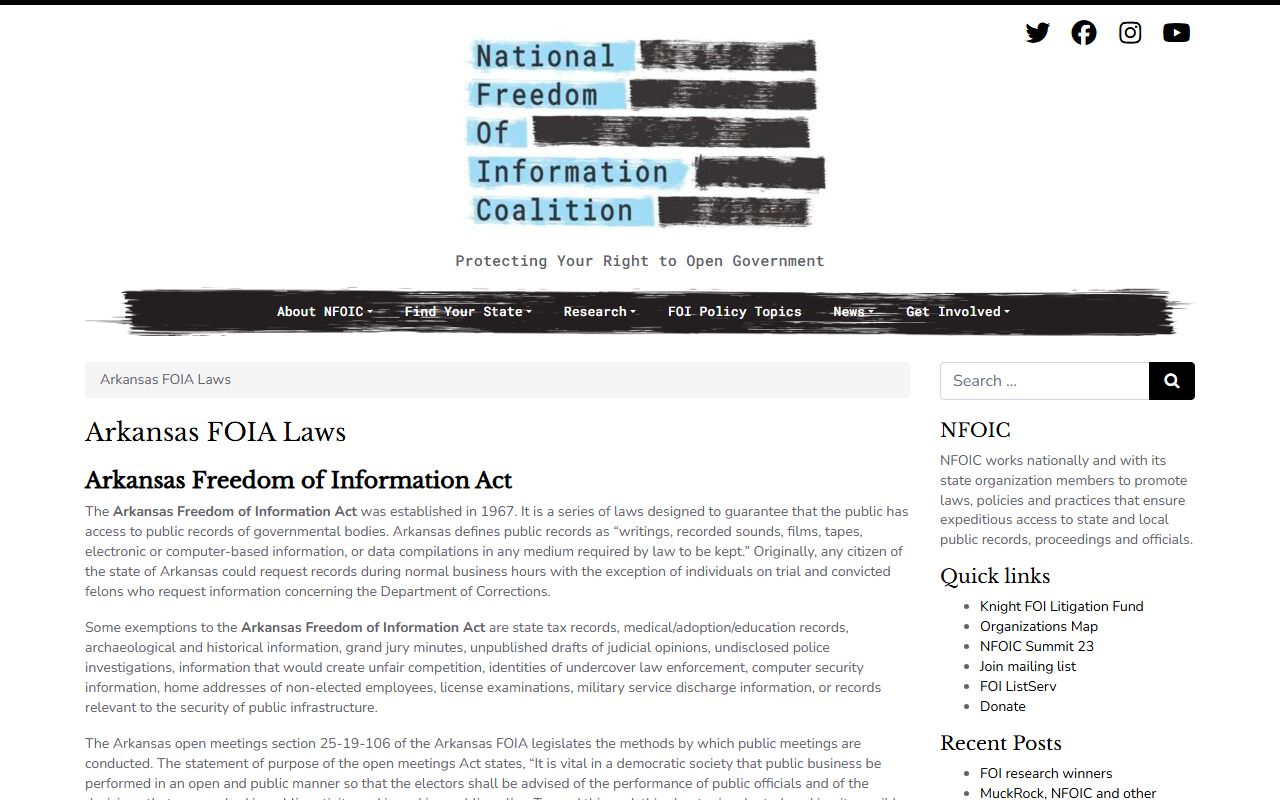
Exemptions under Arkansas FOIA are detailed by the National Freedom of Information Coalition's Arkansas FOIA page. Exemptions cover things like personnel records, ongoing law enforcement investigations, and certain personal data for non-elected government employees. Most traffic court records do not fall under any exemption. If you need to submit a formal FOIA request, the NFOIC provides a sample Arkansas FOIA request template you can adapt for your specific need. A published guide from the Arkansas Advocate also walks through how to use the FOIA process step by step, including how to write a request that is specific enough for the agency to process.
The National Freedom of Information Coalition provides plain-language guidance on Arkansas FOIA law, including what records must be disclosed and how to make a proper request.
Violation of the Arkansas Open Meetings Law, which sits alongside FOIA in the state's records access framework, is classified as a class C misdemeanor under state law.
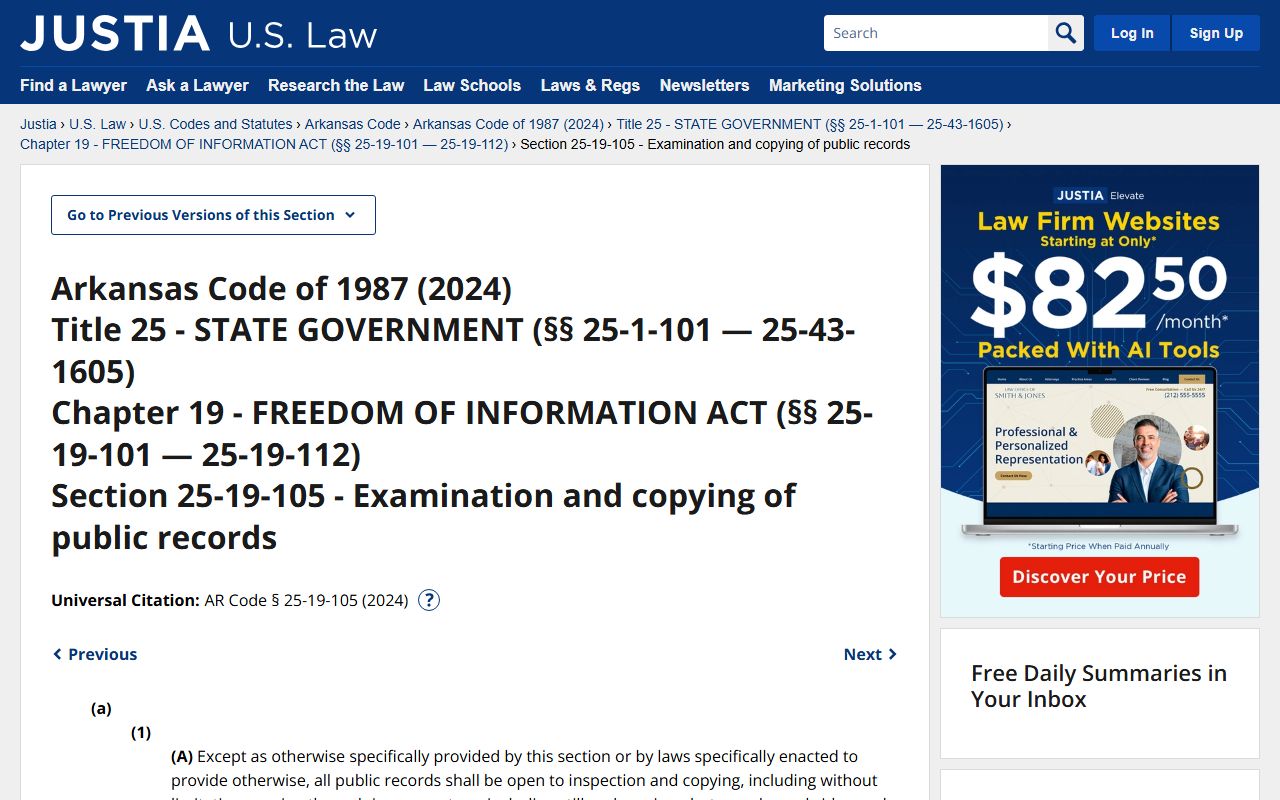
The full text of Arkansas Code Section 25-19-105 on Justia sets out the complete requirements for public records access, including who can request records, what fees apply, and which records may be restricted.
Keep a copy of your FOIA request and note the date you sent it. If you do not hear back within three business days, follow up directly with the records custodian at the court.
The Arkansas sample FOIA request template gives you a starting point for drafting a formal records request that meets the specificity requirements of state law.
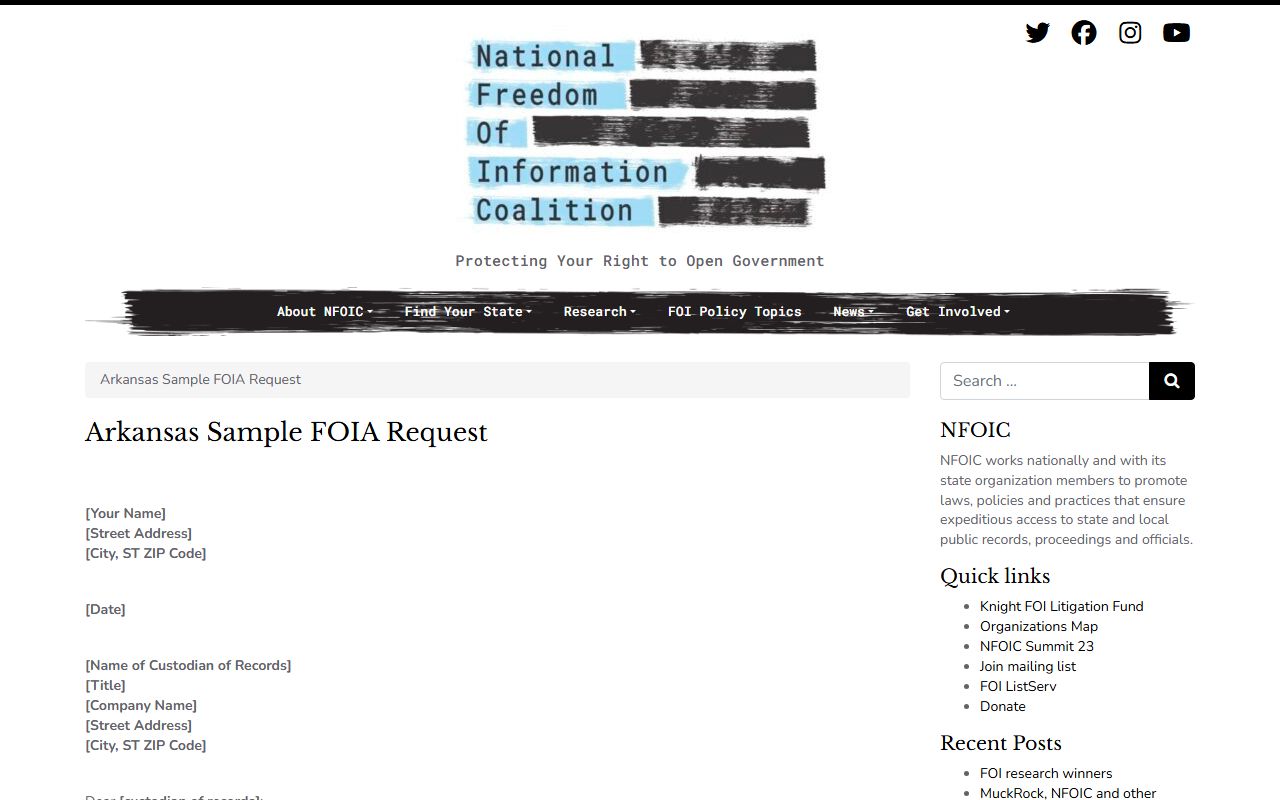
Your request should describe the records in enough detail that the agency can locate them with reasonable effort. Include the case number, party name, and approximate date if you have them.
Note: Under Arkansas Code Section 25-19-105, access to public records can be denied to a person who has pleaded guilty to or been found guilty of a felony and is currently incarcerated in a correctional facility.
Circuit Courts and Traffic Record Appeals
Most Arkansas traffic court records begin and end at the district court level. However, if a case is appealed, the record moves up to the circuit court. Circuit courts are general jurisdiction trial courts that handle appeals from district courts, among many other matters.
Information about how Arkansas circuit courts function, including how they handle appeals and what their five subject matter divisions cover, is available through the official Arkansas Judiciary website.
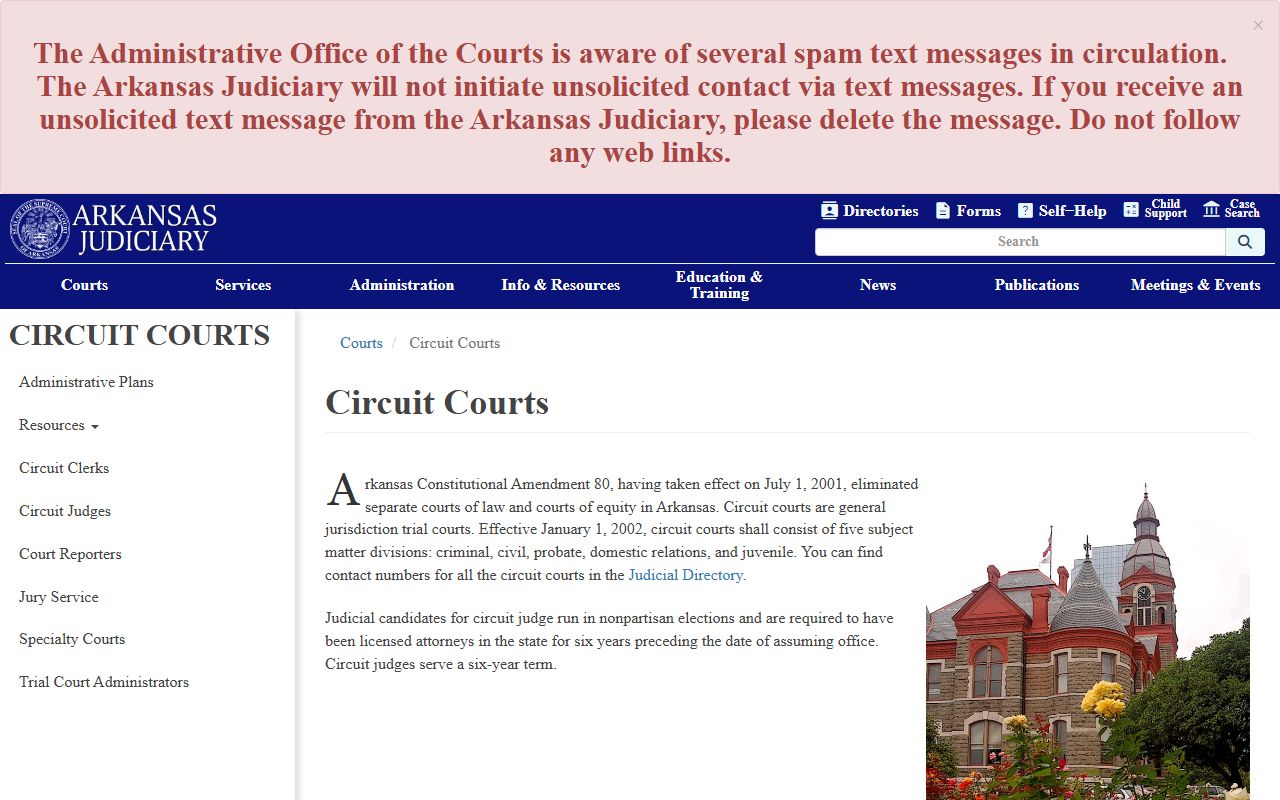
Circuit court records for appealed traffic cases are held at the circuit clerk's office in the county where the appeal was heard. These records are also public under Arkansas FOIA.
The Arkansas Court of Appeals hears intermediate appeals from circuit courts. Traffic cases that raise legal questions about how a law was applied or how a hearing was conducted may eventually reach the Court of Appeals.
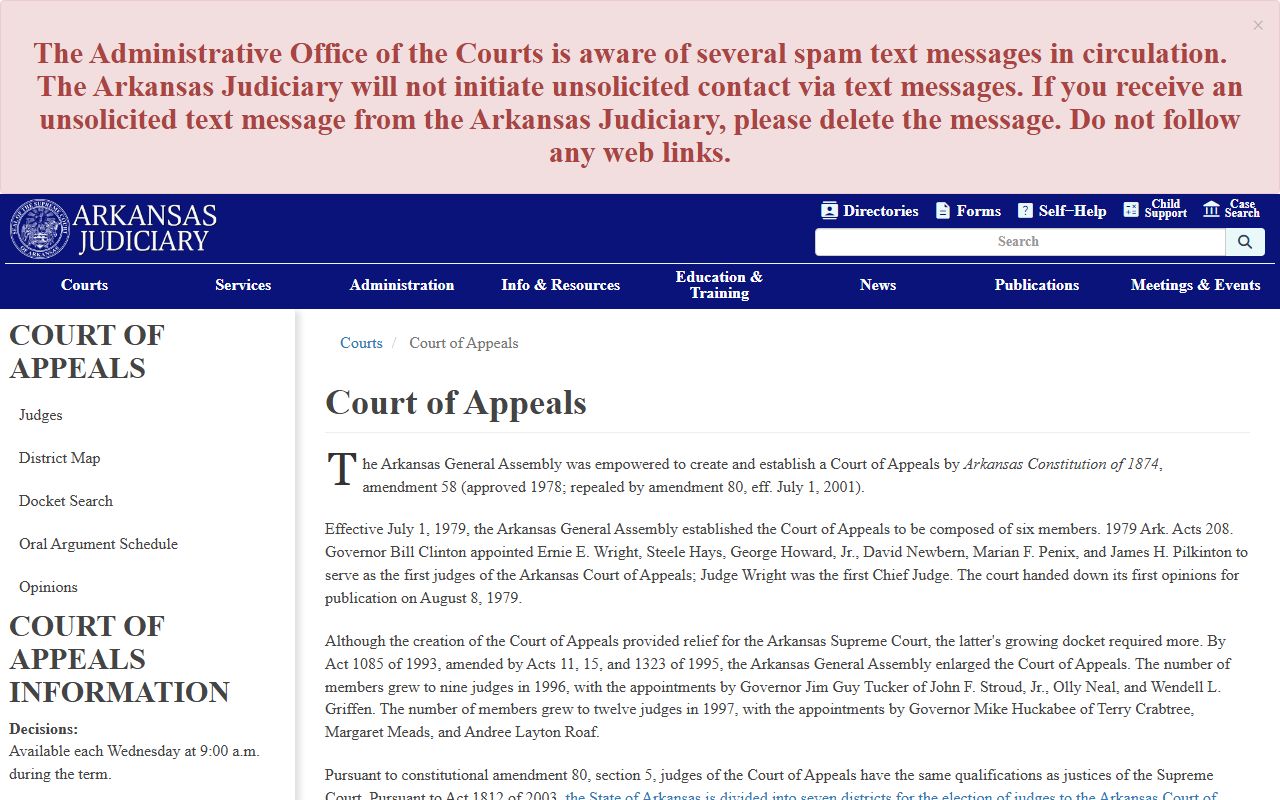
The Court of Appeals has twelve judges divided into seven districts. Its decisions on traffic-related legal questions help shape how district courts across Arkansas apply the law.
Browse Arkansas Traffic Court Records by County
Traffic court records in Arkansas are held by the district court in each county or judicial district. Pick a county below to find local court contact information, search resources, and access details for traffic court records in that area.
Traffic Court Records in Major Arkansas Cities
City residents deal with the district court that serves their area. Pick a city below to find local traffic court resources, search tools, and court contact information for that location.